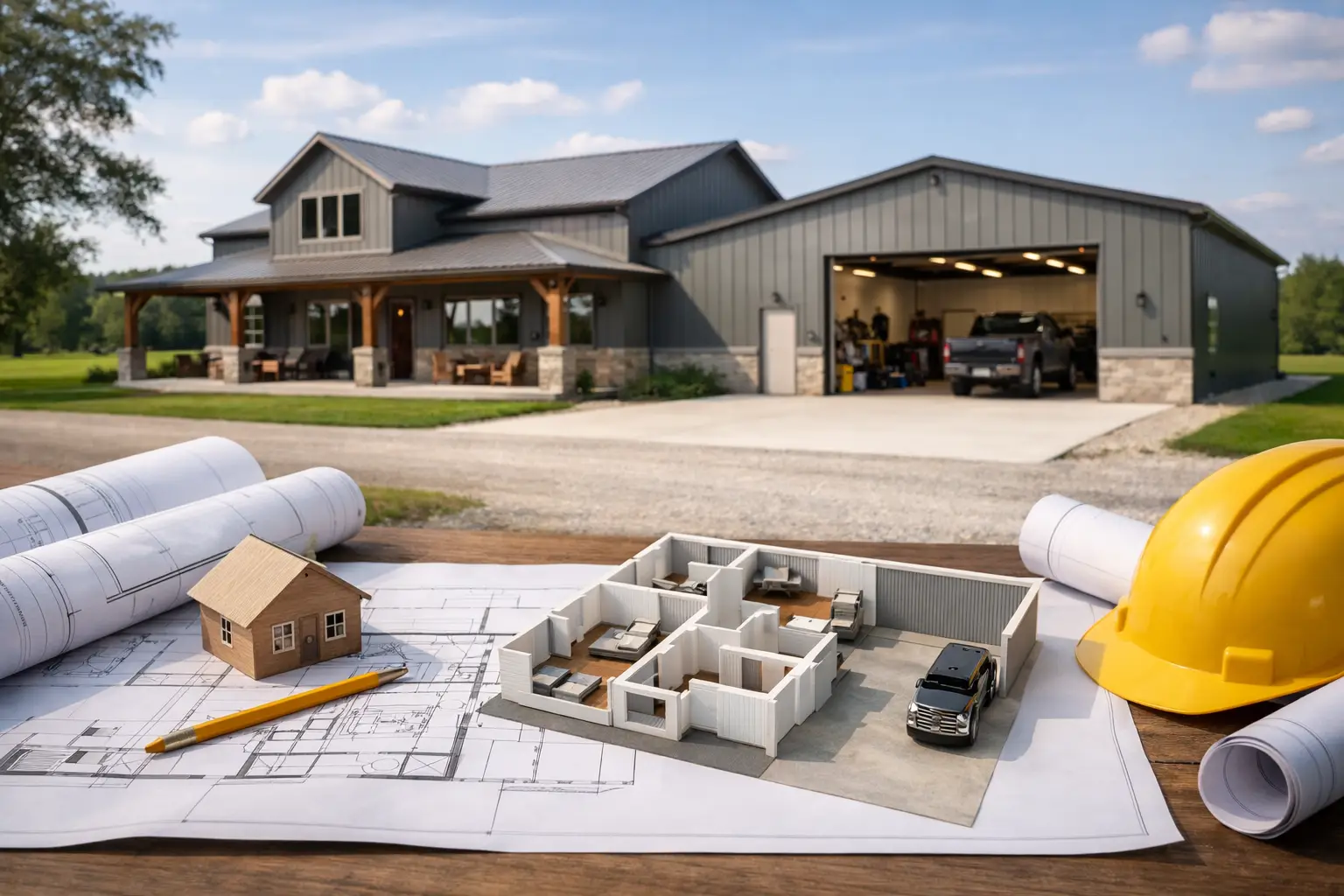
A lot of barndominium projects look great on paper right up until the owner realizes the shop is too small for real work, the house side loses natural light, or the layout forces dirty traffic through the living area. That is why barndominium floor plans with shop need more than a good sketch. They need to match how you actually live, work, store equipment, and move through the building every day.
For most buyers, the real question is not whether to include a shop. It is how much shop space makes sense, where it should sit in the building, and how to keep the residential side comfortable without wasting square footage. If you get those decisions right early, the rest of the project gets a lot easier.
What makes barndominium floor plans with shop work well
The best layouts start with function, not style. A barndominium with a shop is doing two jobs at once. It has to feel like a home, but it also has to perform like a working building. That means your floor plan needs to account for noise, vehicle access, ceiling height, slab design, overhead doors, storage, and daily separation between clean and dirty space.
A common mistake is treating the shop like leftover square footage attached to the house. In practice, the shop often drives the building dimensions, structural design, and site layout. If you need room for a lifted truck, tractor, RV, enclosed trailer, or business inventory, those requirements affect bay spacing, door placement, and eave height from day one.
That is also where planning around a pre-engineered metal building matters. The floor plan should not fight the building system. If the residential layout demands awkward spans, odd structural breaks, or inefficient width changes, costs can climb fast. Good planning keeps the living space attractive while still working within a buildable, economical steel package.
Start with how the shop will actually be used
Before choosing bedrooms, porches, or kitchen islands, define the shop. Is it for hobby use, serious equipment storage, a home-based business, or a mix of all three? Those are very different buildings.
A hobby shop may only need one large overhead door, moderate ceiling height, and a small workbench zone. A working shop for a contractor or mechanic may need multiple bays, deeper slab considerations, compressed air, a wash area, tool storage, and room to maneuver inside. If you are storing an RV or boat, the clear height and bay depth become major design factors.
This is where buyers either save themselves money or create expensive problems. If the shop only gets occasional use, oversizing it may pull budget away from better insulation, a stronger finish package, or site work. But undersizing a shop is usually worse because there is no easy fix once the shell is up.
Shop-first layouts vs balanced layouts
Most barndominium floor plans with shop fall into two broad categories. The first is a shop-first design where the work area takes up the majority of the footprint, with the home side arranged as a smaller but efficient living zone. This setup makes sense for owners who prioritize equipment, fabrication, storage, or business use.
The second is a more balanced layout where the home and shop feel proportionate. This is common for families who want a practical workspace without letting the shop dominate the entire project. In these plans, the challenge is keeping both sides useful. A balanced plan can look appealing, but if neither side has enough room, the whole building starts to feel compromised.
There is no universal right answer. It depends on your land, your budget, and whether the shop is a convenience or a core reason for building.
The most practical ways to arrange the floor plan
One of the most efficient layouts places the shop on one end of a rectangular building and the living space on the other. This keeps the structure simple and helps separate noise and traffic. It also makes it easier to place bedrooms farther from shop activity.
Another common option is a center-living layout with shop space on one side and garage or utility space on the other. This can work well, but it needs careful planning to avoid making the house side dark or chopped up.
L-shaped and courtyard-style plans can look great on larger properties, especially when you want outdoor living areas shielded from wind or road view. The trade-off is that more complex footprints usually cost more to engineer and build than a clean rectangle.
For many owners, the simplest footprint is still the smartest. Straight lines usually mean better value.
Key design decisions that affect cost and usability
Shop size and bay count
A two-bay shop may be enough for personal use, but once you add tools, storage racks, a side-by-side, or a trailer, it fills up fast. A three-bay or deeper shop gives you more flexibility, but you need to make sure the width and depth still fit your site and your budget.
Door size and wall height
This decision should happen early, not after the plan is drawn. If your floor plan includes an RV bay or equipment storage, your overhead doors and wall height need to match real clearance needs, not rough guesses. It is better to measure your tallest equipment now than pay for a redesign later.
Buffer spaces
Mudrooms, mechanical rooms, laundry rooms, storage rooms, and half baths can do more than add convenience. They create a buffer between the shop and the living quarters. That helps with noise, dust, and temperature control. It also makes the transition between work life and home life feel more intentional.
Bedroom placement
Putting bedrooms against a shop wall is rarely ideal. Even with solid construction, sound transfer and vibration can become an issue. Bedrooms usually perform better on the far side of the living area, especially for families or owners keeping early work hours.
Don’t let the house side become an afterthought
A lot of shop-heavy barndominium plans make the home portion feel like a side room inside a warehouse. That may be fine for some buyers, but most people still want the residential side to feel comfortable, bright, and private.
Window placement matters more than many first-time buyers expect. Large shop walls can limit where residential windows go, so the home layout needs to be planned around natural light. Ceiling height also matters. If the shop side is tall and open while the house side is low and tight, the transition can feel abrupt.
It also helps to think about where you enter the home most often. If every daily path runs through the shop, the layout may not hold up well over time. Separate entrances for home guests and work traffic usually make the building function better.
Site planning matters as much as the plan itself
Even strong barndominium floor plans with shop can fail on the wrong site layout. Drive approach, drainage, pad elevation, utility access, septic placement, and turning radius all affect how usable the finished building will be.
For example, a shop with oversized overhead doors does not help much if the driveway approach is too tight for trailers to back in cleanly. A side-entry shop may look good on paper but become awkward if the lot shape or topography works against it. Porch location, sun exposure, and prevailing wind can also change how comfortable the living side feels.
That is one reason early coordination matters. The building footprint, floor plan, and site plan should support each other instead of being handled as separate decisions.
Buildable plans beat pretty plans
There is nothing wrong with wanting a good-looking barndominium. But the best-performing projects usually come from buyers who focus on buildability first. A floor plan needs to work inside a real structural system, on a real piece of land, with a real budget.
That means making smart trade-offs. Maybe you keep the footprint rectangular and spend more on the interior finish package. Maybe you enlarge the shop and simplify the porch design. Maybe you reduce unused hallway space and put that square footage into a better pantry, office, or tool room.
This is where experienced guidance can save time and prevent redesigns. At Turn Key Building Finder, that usually means helping buyers line up the floor plan, steel building package, and contractor path early so they are not solving the same problem three different times.
What to have figured out before requesting pricing
You do not need every cabinet and paint color selected, but you should have a working direction. Know your target building size, rough living square footage, intended shop use, preferred door sizes, and whether you want shell-only support or a more complete turnkey path.
You should also be honest about budget. The right plan is not the biggest one you can imagine. It is the one you can build without constant compromises halfway through. A realistic early scope leads to better quotes, fewer revisions, and a smoother handoff to engineering and construction.
If you are still deciding between two layouts, choose the one that fits your daily use better, not just the one that looks more impressive in a rendering. Square footage is expensive. Bad square footage is even more expensive.
The right barndominium floor plan with shop should make your day easier the moment you move in. If the layout supports how you park, work, store, clean up, and live, you will feel that payoff every single day.
Comments
One response
This was actually one of the more useful barndominium articles I’ve read because it talks about real layout problems instead of just showing pretty pictures. The point about the shop driving the building dimensions makes a lot of sense. A lot of people probably underestimate how fast shop space fills up once you add trailers, tools, or equipment. Good breakdown overall.