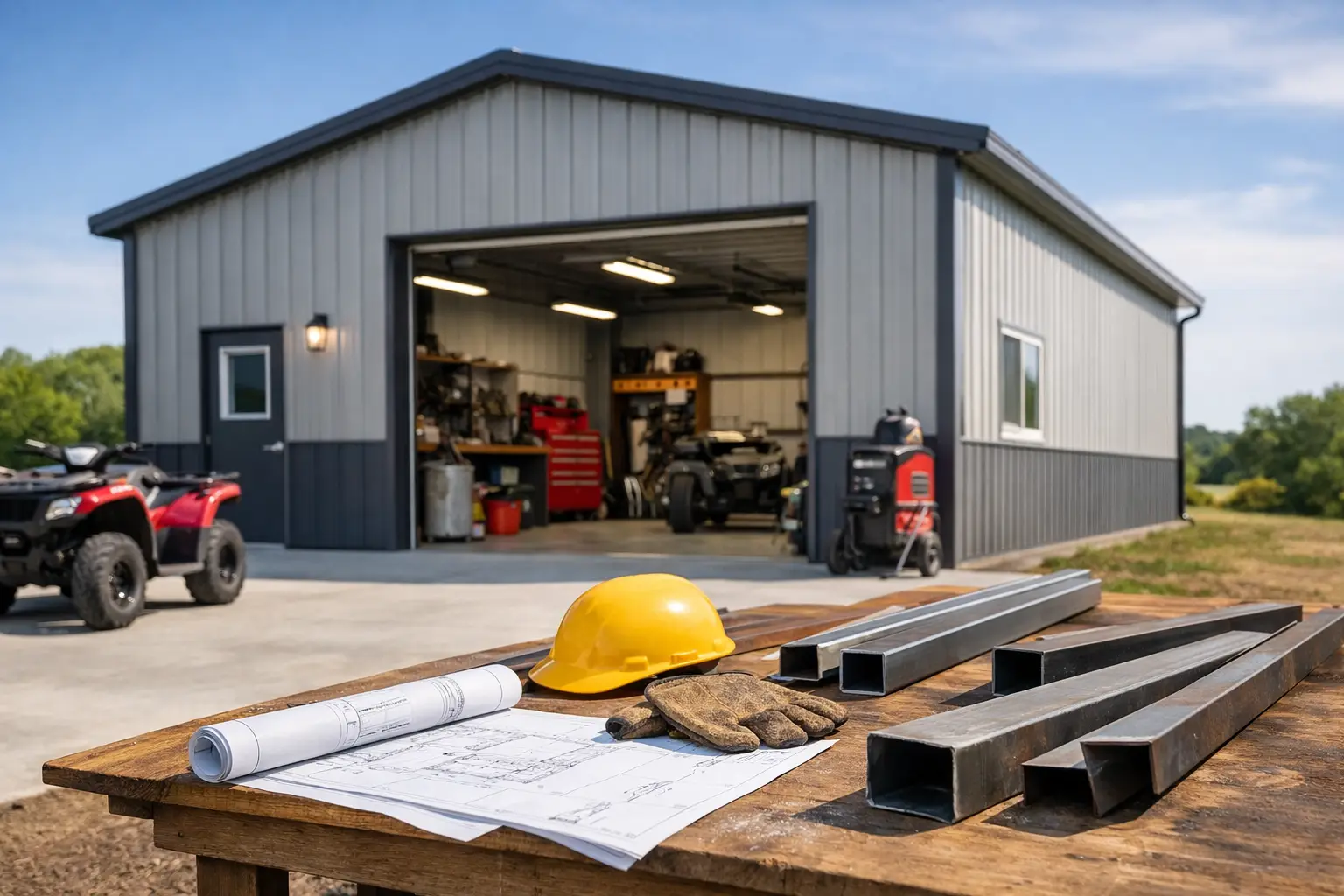
A shop that is too small gets crowded fast. A shop that is overbuilt can eat up budget you needed for concrete, doors, insulation, or electrical. That is why choosing the right metal building kits for shops is less about buying a package and more about matching the building system to how you will actually use it.
For some owners, that means a simple workspace for equipment and weekend projects. For others, it means a business-ready building with wide clear spans, higher eave heights, insulation, liner panels, overhead doors, and room to grow. The kit matters, but so do the decisions around it. If those are made in the wrong order, people end up with quotes that look cheap on paper and expensive in the field.
What metal building kits for shops really include
A metal building kit is usually a pre-engineered steel building package designed around your dimensions, loads, and intended use. In most cases, the kit includes the primary and secondary steel framing, roof and wall panels, trim, fasteners, and engineered drawings for the structure. Depending on the supplier and scope, it may also include framed openings for doors and windows, insulation packages, and color options.
What it usually does not include is just as important. Concrete work, site prep, erection, doors, windows, plumbing, HVAC, and interior build-out are often separate. That is where buyers get tripped up. They compare one quote to another without knowing whether one package includes engineering for local code, framed openings, or heavier steel for snow and wind loads while the other does not.
If you are planning a serious work shop, storage shop, farm shop, or commercial service bay, you want to look beyond the basic shell price. The real question is whether the kit is engineered for your site and set up to support the way you plan to use the building.
How to choose the right shop size and layout
Most shop projects start with square footage, but function should come first. If you will store tractors, trailers, or a motorhome, door height and building depth may matter more than total area. If you need lifts, mezzanines, or large fabrication equipment, clear height and column spacing become major factors.
A small personal shop may work well at 30×40 or 40×50. A farm or equipment shop often moves into the 50×80 range or larger. Commercial users may need wider spans and multiple overhead doors to keep workflow moving. The right answer depends on what goes in the building on day one and what may need to fit five years from now.
It also helps to think through traffic patterns. Where will vehicles enter and back out? Do you need drive-through access? Will you have a dedicated tool room, office, restroom, or parts storage area? Those decisions affect door placement, wall height, and slab design. They also affect cost more than many buyers expect.
Key design choices that change price and performance
Two shops can have the same footprint and very different budgets. The main cost drivers are not just width and length. They include eave height, roof pitch, local code requirements, insulation level, openings, and interior demands.
Higher eave heights add flexibility, especially if you plan to install a lift or store taller equipment, but they also increase steel and panel requirements. Large overhead doors are another common budget driver. A 12×12 door and a 14×16 door are not the same conversation, especially once framing and installation are involved.
Roof style matters too. A straightwall rigid frame building is common for shops because it gives you usable wall space and strong clear-span performance. In lighter-duty applications, other framing approaches may work, but the best choice depends on the loads, span, and end use.
Insulation is another area where buyers either overspend or underbuild. If the shop will be conditioned year-round, the insulation package should be planned early, not added as an afterthought. If the building is mainly for cold storage, your needs may be simpler. The point is to match the package to the use, not to a generic upgrade list.
Why local engineering is not optional
A shop in Texas is not engineered the same way as a shop in Montana or coastal Florida. Wind exposure, snow loads, seismic requirements, and local code enforcement all affect the frame, connections, and panel design. That is why a low number from an out-of-market seller can turn into a problem once the building has to meet permit requirements.
Engineered metal building kits for shops should be designed for the actual jobsite. That includes the governing codes and loading requirements for your county or city. If your supplier is not asking where the building is going, what the occupancy is, and whether the site has special conditions, you are not getting a complete quote.
This is one of the biggest reasons buyers benefit from working with someone who understands both the steel package and the path to construction. A building that cannot get permitted or requires redesign late in the process is not a bargain.
Common mistakes shop buyers make
The first mistake is shopping only by price per square foot. That number can be useful for rough planning, but it hides too much. It does not tell you if the building is designed for your loads, if the doors are included, if the insulation is comparable, or if erection complexity has been considered.
The second mistake is finalizing the building before thinking through site work and concrete. Your slab may need thickened edges, equipment pads, anchor bolt coordination, or special reinforcement depending on the building and use. Those pieces need to work together.
The third mistake is underestimating interior needs. A bare shell sounds simple until you realize you need power, lights, ventilation, drains, restrooms, office space, or finished walls. It is better to plan the whole project early than to treat the kit as the whole budget.
Another common issue is buying a shop with no room for future use. A little extra width or height can make a major difference later. That does not mean everyone should oversize. It means the design should reflect real use, not just the cheapest starting point.
When a basic kit works and when you need more support
If you are an experienced owner-builder with a clear plan, a straightforward site, and a trusted crew, a shop kit can be a very efficient path. You can control the scope, coordinate local trades, and move the project at your own pace.
But many buyers are not just buying steel. They are trying to line up floor plans, engineering, suppliers, concrete, erection, and finish work without losing time or money. That is where the process gets fragmented. One party blames another, details get missed, and the owner ends up managing gaps between vendors.
For a more involved project, especially one with business use, permit complexity, or multiple moving parts, having guidance on the full sequence matters. Turn Key Building Finder helps bridge that gap by matching buyers with the right building package and the right team instead of leaving them to sort through disconnected quotes on their own.
What to have ready before requesting a quote
The better your project information, the better your pricing and recommendations will be. Start with the planned building size, intended use, jobsite location, and any must-have features like overhead door sizes, insulation, or interior space needs. If you already have a floor plan or sketch, that helps. If not, a simple list of use requirements is enough to start the conversation.
You should also think about schedule. Are you trying to get a shell up quickly, or are you planning a phased build with finish work later? That changes how the project should be approached. Budget range matters too. Not because someone should sell to your number, but because realistic expectations save time for everyone.
A good quote process should narrow the path. It should not leave you with more confusion than when you started.
The best shop kit is the one that fits the job
There is no single best answer for every owner, acreage, or business. The best metal building kit for a shop is the one that fits your use, your site, your code requirements, and your build plan without forcing expensive corrections later.
That usually means slowing down just enough to make the key decisions in the right order. Get clear on function. Match the building system to the local requirements. Understand what is and is not in the package. Then line up the people who can carry the project from quote to completed structure.
A good shop should work hard for years, not create headaches before the slab is even poured. Start with the right plan, and the rest of the project gets a whole lot easier.