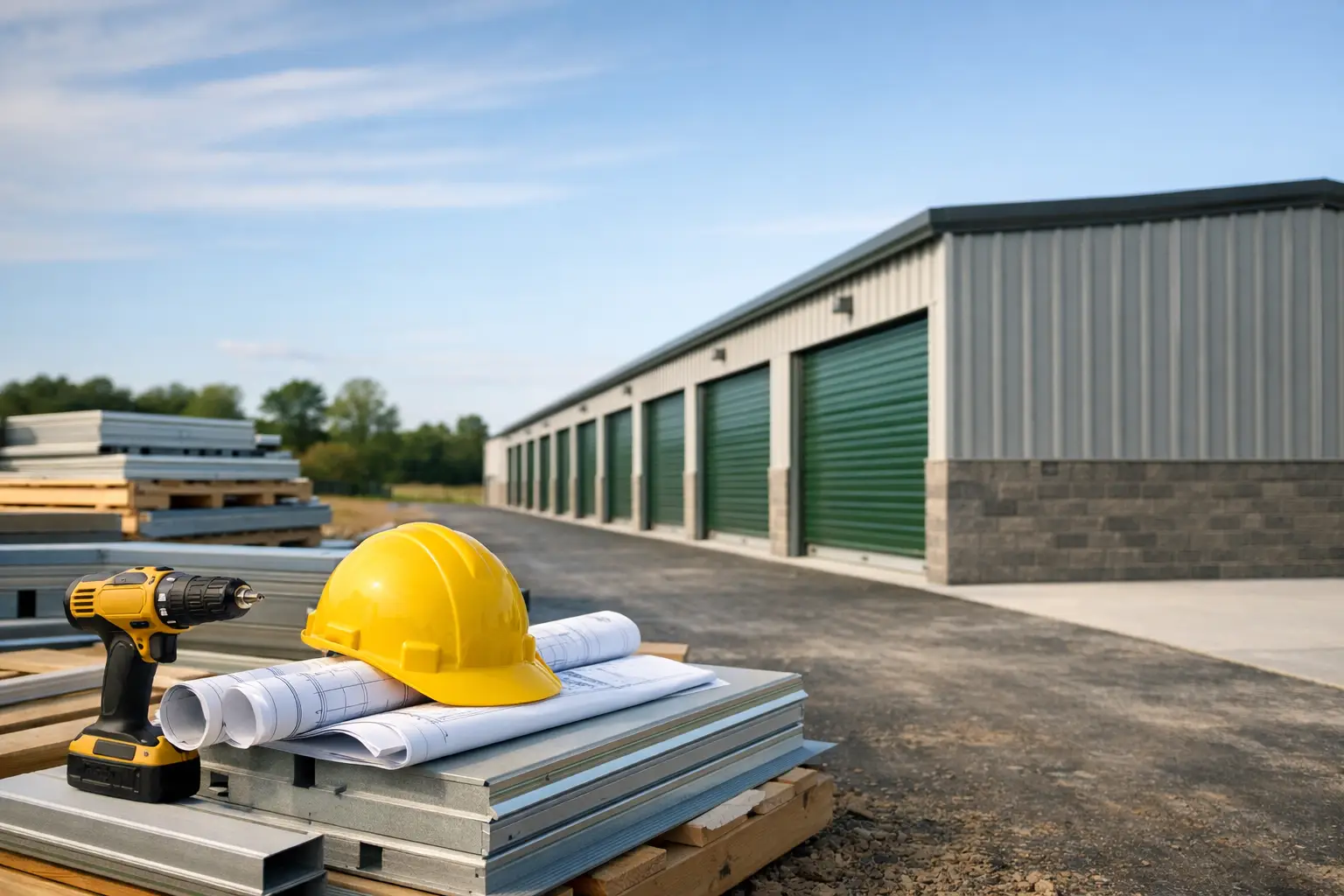
A self-storage project can look simple from the road – rows of doors, gravel drive lanes, a fence, and a keypad. But the money is made or lost long before the first panel goes up. Self storage building kits can speed up construction and bring more cost control to the job, but only if the layout, site work, engineering, and contractor plan all line up from the start.
That is where many first-time owners get tripped up. They focus on the kit price and underestimate everything around it – drainage, access widths, slab design, door counts, local code, and how the building actually needs to function once tenants move in. A good kit helps. A well-planned project performs.
Why self storage building kits are popular
For many owners and developers, pre-engineered metal systems make sense because they solve a real problem. Traditional construction can be slow, harder to price up front, and more dependent on local labor conditions. With self storage building kits, the structural package is engineered before it reaches the site, which usually means faster erection, cleaner material coordination, and fewer surprises than piecing together a building from multiple sources.
That does not mean every project is plug-and-play. The building kit is one part of the job. You still need the right unit mix, usable traffic flow, a site plan that works in bad weather, and a builder who understands commercial steel erection. If those pieces are weak, even a good building package will not save the project.
What is usually included in self storage building kits
Most self storage building kits include the primary and secondary steel framing, roof and wall panels, trim, fasteners, and engineered drawings for the building system. Depending on the design, the package may also include framed openings, partition systems, roll-up doors, hallway components for interior climate-controlled space, and insulation packages.
What is not always included matters just as much. Slabs, foundations, earthwork, paving, utilities, fencing, security systems, lighting, fire protection, and office buildout are often separate scopes. Some buyers assume a kit price reflects a nearly finished facility. In most cases, it does not.
That is why the first real question is not, “What does the kit cost?” It is, “What does the full project need?” Those are two different numbers, and mixing them up leads to bad budgeting.
The layout matters more than most buyers expect
A storage facility is really an operations business wrapped in a construction project. If the layout is wrong, the problems stick around for years. Too many large units in a market that wants 10x10s and 10x15s can hurt occupancy. Drive aisles that feel tight for moving trucks create daily friction. Poor drainage near unit doors becomes a tenant complaint and a maintenance issue.
This is where self storage building kits need to be matched to the business plan, not the other way around. A rural market may favor more non-climate units and boat or RV storage. A denser suburban site may justify climate-controlled buildings with interior corridors and stronger security features. The building system should support the use case, local demand, and site constraints.
The best approach is to decide on the unit mix and traffic pattern first, then fit the building package to that plan. Buyers who start by shopping kit prices before they understand the layout often end up redesigning later, which costs time and money.
Site work can make or break your budget
A flat, accessible site with good soils is one thing. A site with drainage issues, poor compaction, utility conflicts, or a lot of cut-and-fill is another. Two facilities with the same building footprint can have very different total costs because the site conditions are different.
This is why experienced buyers look at self storage building kits as one line item inside a larger project budget. If the land needs major prep, retaining walls, stormwater work, or long utility runs, the building package may not be the biggest cost driver. In some cases, the cheapest kit quote ends up attached to the most expensive overall path because it does not fit the site efficiently.
A practical preconstruction process usually includes basic site due diligence, preliminary layout work, and realistic budgeting before ordering the building. It is slower on the front end, but it saves expensive corrections later.
Climate-controlled vs. non-climate-controlled builds
One of the biggest early decisions is whether the project will be climate-controlled, non-climate-controlled, or a mix of both. Each option changes the building design, operating costs, and target customer.
Non-climate storage is usually simpler and less expensive to build. It can work well in many secondary and rural markets where tenants want practical storage at a lower monthly rate. Climate-controlled buildings require more planning around insulation, vapor control, hallway configuration, HVAC, and in some cases fire protection. They cost more up front, but they may support higher rents in the right market.
There is no universal winner here. It depends on demand, land cost, competition, and your operating model. The wrong choice is usually the one made from assumptions instead of local market research.
How pricing really works
Buyers often want a fast per-square-foot number, which is understandable. The problem is that self-storage pricing is not just about square footage. Width, eave height, roof system, door count, hallway layout, code requirements, wind exposure, snow loads, and insulation all affect the building package. Then you still have foundation design, slab thickness, site improvements, and labor.
So yes, you can get budget ranges early. But serious pricing gets better when the floor plan is more defined. A quote tied to actual dimensions, unit layouts, and project location is more useful than a low teaser number that changes later.
That is one reason many owners use a guided process rather than trying to collect random quotes from unrelated vendors. The more complete the information going in, the better the pricing and the fewer revisions on the back end. Turn Key Building Finder helps buyers sort through that process by matching the project to the right building system and the right execution path, instead of leaving them to coordinate every moving part alone.
Choosing the right builder matters as much as the kit
A quality building package still needs a qualified crew. Storage facilities may look repetitive, but steel erection, door installation, slab tolerances, weatherproofing, and scheduling all need to be handled correctly. A builder with general construction experience is not always the same as a builder who is efficient with pre-engineered metal systems.
This is especially true if the project includes multiple buildings, phased construction, or climate-controlled sections. Sequencing matters. So does communication between the engineer, supplier, concrete crew, and erection team. When those groups are not aligned, delays show up fast.
A good contractor does more than build what is on the page. They flag conflicts early, keep the schedule realistic, and understand where storage projects tend to run into trouble.
Common mistakes to avoid with self storage building kits
The most common mistake is treating the kit like the whole project. The second is choosing a layout based on guesswork. After that, buyers run into trouble when they skip site due diligence, underestimate permitting, or hire a contractor who is not strong with metal building systems.
Another issue is overbuilding for the market. Bigger is not always better. More climate-controlled square footage, oversized units, or added features only make sense if the local demand supports the rent needed to justify them. A simpler facility with the right unit mix can outperform a more expensive project that chases the wrong customer.
What to have ready before you request pricing
You do not need every detail finalized, but you will get far better numbers if you can provide the project address, target building dimensions, rough unit mix, desired use type, and whether the facility is climate-controlled or not. If you already have a conceptual site plan or floor plan, even better.
That information helps narrow down the right system, the likely code and loading requirements, and whether the job calls for a straightforward supply package or a more managed approach with contractor coordination. Better inputs lead to better quotes. Simple as that.
If you are still early in planning, that is fine. The key is to make your next step a useful one. Start with the layout, the land, and the market. Then match the building kit to the project you actually need to build – not just the one that looks cheapest on paper.