A hangar that is too short, too narrow, or built around the wrong door becomes an expensive problem fast. That is why airplane hangar building kits need to be evaluated as full building systems, not just steel packages with a price tag attached. The right kit has to fit the aircraft, the site, the use case, and the build team from day one.
What airplane hangar building kits actually include
Most airplane hangar building kits are pre-engineered metal building packages designed around your span, height, door opening, wind exposure, and local code requirements. In plain terms, the steel is engineered before it gets to your site, then fabricated and shipped as a coordinated package.
That package usually includes the primary steel framing, secondary framing, roof and wall panels, trim, fasteners, and stamped engineering documents for the building shell. Depending on the supplier and the project scope, it may also include insulation packages, framed openings, canopies, liner systems, and door support steel.
What it usually does not include is just as important. Site work, concrete, utilities, interior build-out, fire protection, aircraft-specific equipment, and erection labor are often outside the base kit. That is where buyers get tripped up. A low kit number can look great until the rest of the project starts filling in around it.
Why hangars are different from other metal buildings
A hangar is not just a warehouse with a big opening. Aircraft clearances, wing span, tail height, taxi flow, and door operation all affect the structural design. The building has to work when the plane is moving, not just when it is parked.
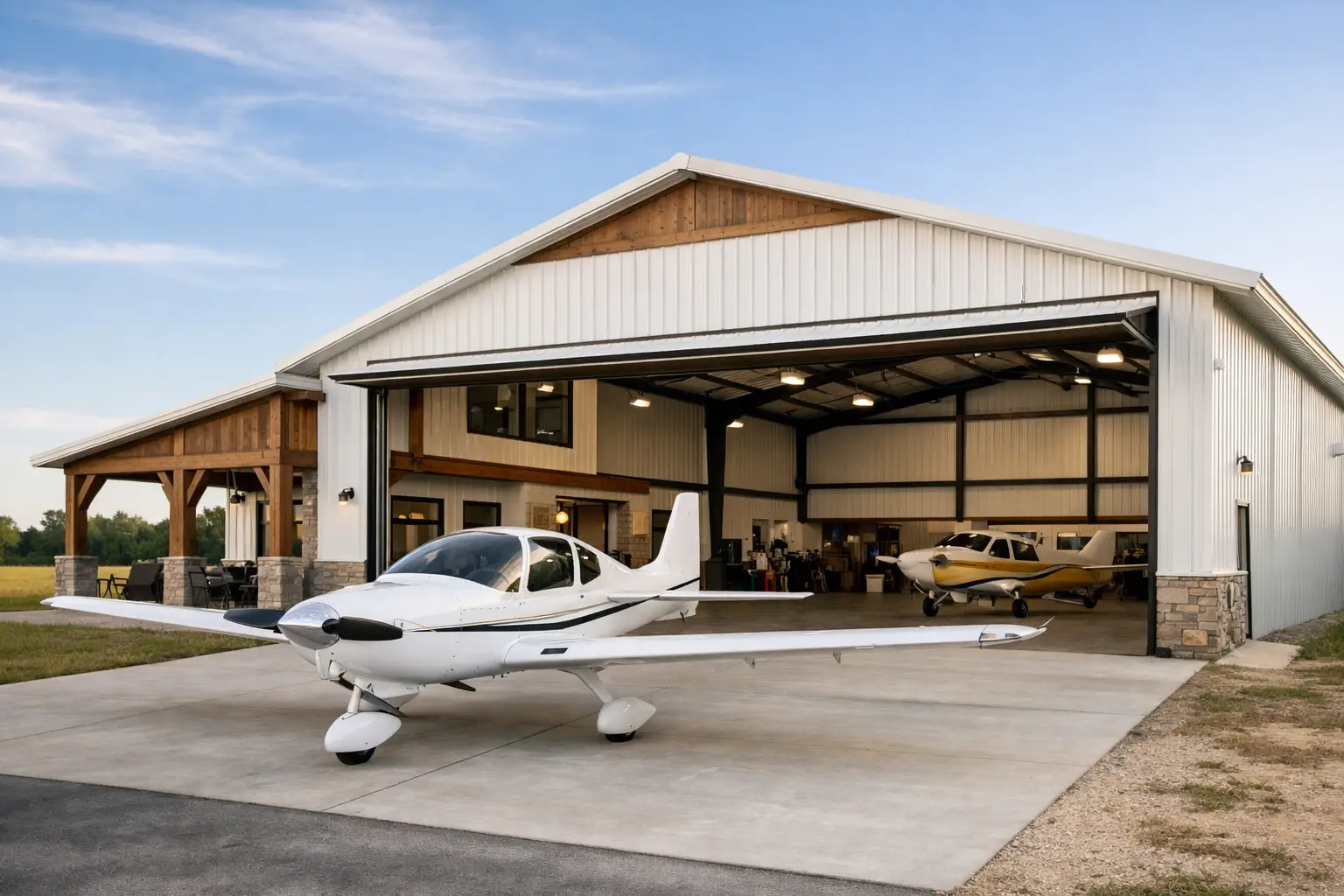
Door design drives a lot of the project. A hydraulic door, bifold door, or sliding door changes the building layout, header requirements, clear opening, and apron use. If the door is not coordinated early, the whole building can be wrong for the aircraft it is supposed to serve.
There is also a big difference between a private hangar for a single aircraft and a commercial hangar built for multiple tenants, maintenance use, or mixed storage. One may be mostly about clear span and convenience. The other may need office space, restrooms, shop areas, insulation, ventilation, and traffic flow that supports day-to-day operations.
Start with the aircraft, not the building brochure
The cleanest way to shop airplane hangar building kits is to start with the aircraft you need to house. Wingspan, overall length, and tail height matter, but so does the way the aircraft enters and exits the building. You need enough space to maneuver without turning every parking event into a risk.
That usually means building in more room than the aircraft dimensions alone suggest. A hangar sized only to the plane on paper can feel cramped in real use. You may want space for maintenance access, tool storage, a vehicle, spare parts, or future aircraft changes. Buyers who think one step ahead usually end up happier with the finished building.
If the hangar is part of a larger property strategy, that should be considered too. Some owners want a straightforward aircraft storage building. Others want a hybrid setup with workshop space, office area, or even a nearby residence on the same property. That kind of planning matters because the site layout, utilities, and budget should be aligned early rather than pieced together later.
Sizing and clear span decisions
Clear span is one of the biggest selling points in metal hangar construction. Fewer interior columns mean easier aircraft movement and fewer obstructions. For many hangar owners, that is worth paying for.
Still, bigger is not automatically better. Wider clear spans and taller sidewalls can raise steel costs, increase foundation demands, and affect door pricing. If your aircraft and operating needs can be served by a more efficient footprint, that may be the smarter move.
The best sizing decisions usually come from balancing four things: current aircraft dimensions, future flexibility, door opening requirements, and total project budget. If one of those gets ignored, the project can become either too expensive or too limiting.
Door type changes everything
Hydraulic doors are popular because they provide a clean opening and solid weather seal when designed properly. Bifold doors can also work well and may be preferred depending on the opening size and operational goals. Sliding doors are still used in some applications, especially where budget and simplicity are priorities.
Each option affects headroom, apron clearance, maintenance expectations, and structural loading. This is one area where buyers should not chase the cheapest number without understanding the trade-offs. The door is not a side decision. It is central to how the hangar functions.
Cost expectations for airplane hangar building kits
There is no honest one-size-fits-all price for airplane hangar building kits because the range is wide. Size, location, wind and snow loads, door system, insulation, foundation design, and interior finish level all move the number.
A basic small private hangar shell will be priced very differently from a larger insulated hangar with office space, plumbing, electrical, and a premium door package. The steel kit itself is only one part of the final project cost. Concrete and erection are often major line items, and site conditions can add more than buyers expect.
This is why quote quality matters more than quote speed. If one supplier is pricing a bare shell and another is pricing a better-defined package with door supports, insulation, and framed openings, the numbers will not be comparable. On paper, one looks cheaper. In the real world, it may simply be missing scope.
For buyers trying to control costs, the better path is to define the building clearly before comparing prices. Lock in the dimensions, design loads, door type, insulation needs, and any interior requirements. Then compare apples to apples.
Site and code issues that affect the build
Even the best kit can turn into a bad project if the site is not vetted properly. Soil conditions, drainage, access for delivery and erection, utility availability, and local permitting rules all shape the real cost and timeline.
Airport properties can add another layer. Lease requirements, design standards, fire separation, and operational restrictions may affect the building layout and approvals. Private airstrips may be simpler in some ways, but local code and wind exposure still matter. In parts of Texas and across the South, wind design is not something to gloss over.
Engineering has to match the actual jobsite. That sounds obvious, but many problems start when buyers assume a standard package will work anywhere. Pre-engineered does not mean generic. It means the system should be engineered to the specific project conditions.
Choosing the right supplier and builder team
A hangar project usually goes smoother when the floor plan, steel package, and construction team are coordinated early. If those pieces are disconnected, someone ends up guessing, and that guess often shows up later as change orders, delays, or a building that does not function the way it should.
That is one reason many buyers want a single point of contact who can help line up the building system, pricing, and contractor path. Turn Key Building Finder works in that gap. Instead of sending owners off to juggle manufacturers, plans, and builders on their own, the goal is to simplify the process and get the right team around the project before mistakes get expensive.
This matters even more for buyers comparing hangars with other property goals. Some landowners are planning an aircraft hangar now and a barndominium, shop house, or additional metal building later. When that is the case, it helps to think bigger than one structure. Site layout, utility runs, driveway access, and future building placement can save money when planned as part of an overall property strategy.
When a custom kit makes more sense than a standard package
Some buyers hope to find a ready-made hangar size that fits perfectly. Sometimes that works, especially for straightforward private storage needs. But custom-engineered kits are often the better choice when door openings are large, aircraft are unique, wind loads are high, or the building needs office or shop space built in.
A custom package is not about overcomplicating the job. It is about reducing mismatch. If the building is engineered around the actual aircraft, site, and operating needs, the project tends to perform better and price more honestly from the start.
That same mindset is familiar to anyone shopping barndominium floor plans. A plan may look great online, but it still has to fit your land, your budget, and how you plan to live. Hangars work the same way. Good building decisions happen when the layout matches the use, not when someone buys the first package that looks cheap.
If you are in the early planning stage, the smartest next step is to define the aircraft, the door opening, the site, and the level of finish you actually need. Once those basics are clear, pricing gets better, comparisons get easier, and the path to a functional hangar gets a whole lot cleaner.
Leave a Reply