When buyers ask how are metal building kits delivered, they are usually really asking something bigger – what is going to show up on my property, how much space do I need, and what can go wrong if I am not ready? That matters whether you are planning a barndominium, a shop house, a warehouse, or a commercial steel building. Delivery day is where paper plans turn into a real project, and a lot of avoidable problems start right there.
A metal building kit does not arrive like a packaged retail product. It comes as a coordinated shipment of structural steel components, trim, panels, hardware, and engineered parts that are staged for assembly. The exact delivery setup depends on building size, manufacturer, site access, and whether your project includes a residential barndominium floor plan, a shop addition, or a larger commercial footprint.
How are metal building kits delivered to your site?
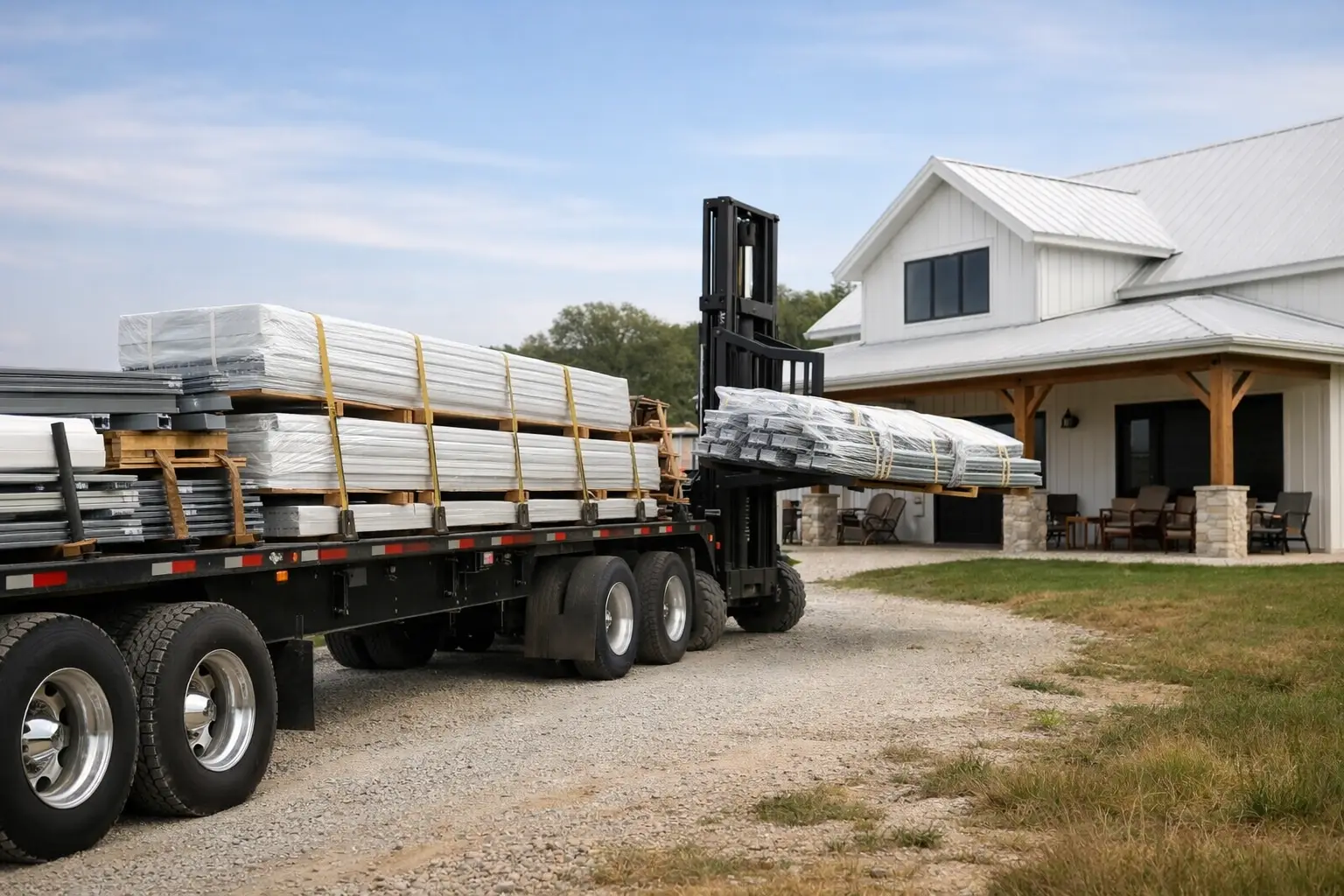
Most metal building kits are delivered by flatbed truck, and larger projects may require multiple loads. The main steel frames, secondary framing, roof and wall panels, trim packages, and accessory items are banded, stacked, and loaded in a sequence that makes transport practical. On some projects, the entire package arrives in one trip. On others, especially larger barndominiums with shop space or wider clear-span buildings, deliveries are split across several trucks.
The building manufacturer typically schedules delivery once drawings are approved, production is complete, and the site is close enough to ready that materials can be received without sitting exposed for too long. If the slab is not ready, access roads are soft, or unloading equipment is not lined up, delivery can become expensive fast.
That is why timing matters as much as transportation. A well-priced kit can still become a headache if it lands on a muddy site with nowhere to stage steel.
What actually arrives in the shipment
Most buyers are surprised by how many individual pieces are involved. Your shipment usually includes primary rigid frames or columns and rafters, secondary members such as purlins and girts, roof and wall panels, base trim, rake trim, ridge caps, fasteners, connection hardware, and any ordered accessories like framed openings, walk doors, windows, insulation packages, or overhead door components.
For barndominium projects, the shell package is only one part of the broader build. If you are comparing barndominium floor plans or pricing out a plan with shop space, remember that delivery of the steel package is separate from many interior build components. Cabinets, plumbing fixtures, drywall materials, and finish items do not arrive as part of a standard metal building kit unless a very specific package says otherwise.
Delivery is curb-to-site, not full setup
This is where expectations need to stay realistic. In most cases, the truck delivers the package to your property, but the driver is not there to manage your staging plan, sort your materials, or erect the building. Delivery usually means transport to the site and unloading responsibility is handled by the buyer, contractor, or arranged equipment crew.
Some suppliers include basic unloading terms, but many do not provide cranes, forklifts, or labor. The trucking company wants safe access, a clear path in and out, and a reasonably efficient unload. If the truck gets stuck, waits too long, or cannot safely enter the site, those costs can come back to the owner.
That is one reason experienced buyers coordinate their builder before delivery is booked. If your contractor knows the erection sequence, they can help decide where each bundle should go so the crew is not moving steel around twice.
Who unloads the kit?
Usually, the owner or general contractor arranges unloading equipment. For smaller kits, that may be a forklift or telehandler with enough capacity for bundled materials. For larger rigid-frame packages, especially wider or taller structures, a crane or larger lifting equipment may be required.
It depends on the building size and the heaviest piece in the shipment. A simple residential shell and a large commercial clear-span building are not handled the same way. Buyers planning a barndominium with an open-concept living area plus shop often underestimate this because the home side feels residential, but the steel package still behaves like a commercial delivery.
Site access can make or break delivery day
The truck has to reach the unload area without fighting tight turns, low branches, soft soil, steep grades, or narrow gates. Rural properties are common barndominium sites, which means beautiful land but sometimes poor access for long trailers.
If your property has a winding drive, unfinished road base, or limited turnaround space, that needs to be discussed before shipping is finalized. Sometimes the answer is simple, like trimming trees or widening an entry. Other times, it means using a different unload location and moving materials around the site with local equipment.
This is especially common in Texas barndominium projects and across the South where raw land is part of the appeal. The view may be perfect. The access route may not be.
How much space do you need?
You need room for the truck to enter, park, and unload safely, plus a staging area that keeps components organized and out of standing water. Steel should not be dropped randomly across the site. Panels can be damaged, trim can get bent, and hardware can disappear quickly if materials are not staged with some discipline.
A good setup includes firm ground, separation between structural steel and panel bundles, and protection from runoff or mud. Your erection crew will thank you later, and that usually saves time when installation starts.
How delivery works for barndominium projects
Barndominiums add another layer because buyers are often juggling both shell logistics and residential planning. Someone comparing modern farmhouse barndominium layouts or barndominium plans with shop may assume the delivery process follows a standard homebuilding model. It does not. The steel shell is more industrial in how it arrives and is handled.
That is not a bad thing. It just means your planning needs to be tighter. If you already have a finalized layout, clear building dimensions, and a builder who understands metal systems, delivery is usually straightforward. If the floor plan is still changing, door openings are not nailed down, or the slab schedule keeps moving, delivery gets harder to coordinate.
This is one reason many buyers do better when they choose the floor plan, shell package, and builder path together instead of piecing the project together in fragments. Better coordination upfront usually means fewer shipping surprises later.
Common delivery issues and how to avoid them
The most common problems are not mysterious. The site is not ready. The unloading equipment is too small. Nobody knows where materials should be staged. The owner assumes the driver will help beyond normal delivery limits. Or the project schedule slips after shipment is already booked.
Weather can also create problems. Steel deliveries and muddy sites do not mix well. If heavy rain is in the forecast and your access road is marginal, it may be worth adjusting timing instead of forcing a bad delivery day.
It also pays to check the shipment against the packing list as materials arrive. That does not mean opening every bundle on the spot, but it does mean confirming major components, visible damage, and accessory counts while the delivery is fresh and documented.
What to ask before your kit ships
Before delivery is scheduled, get clear answers on a few practical items. Ask how many truckloads are expected, whether unloading is included or not, what the heaviest components are, what equipment is recommended, and whether your site conditions have been reviewed. You should also confirm where materials can be staged and how long they may sit before erection begins.
If you are still comparing affordable barndominium plans, this is also a smart time to separate shell cost from total project cost in your mind. Delivery is one line item in a much larger build sequence. A lower kit price does not always mean better value if logistics are poorly managed or if the package is mismatched to your floor plan.
For buyers who want less guesswork, working with one point of contact for the plan, building package, and contractor coordination can simplify the whole process. That is especially helpful when you are trying to match a specific layout to a steel system that can actually be delivered, staged, and erected efficiently.
A metal building kit delivery should feel organized, not chaotic. When the right floor plan, the right steel package, and the right site prep come together, the trucks show up, the materials get staged properly, and your project starts moving the way it should. If you are still in the planning phase, now is the time to compare layouts, confirm your site conditions, and get pricing that reflects the real build – not just the shell on paper.
Leave a Reply