A roof failure usually does not start with one big dramatic event. More often, it starts when a building was quoted too lightly for the site, the roof shape was not matched to local conditions, or the owner assumed all steel kits are engineered the same. If you are planning an engineered metal building for snow load, that assumption can get expensive fast.
For barndominiums, shops, and mixed-use builds, snow load is not just a line item on a quote. It affects the frame design, roof slope, purlins, secondary steel, connections, and sometimes even the layout you choose. A wide-open living area, a shop with fewer interior supports, or a broad porch line can all change how the building handles weight from accumulated snow.
What an engineered metal building for snow load really means
An engineered metal building for snow load is a pre-engineered steel system designed for the specific loading conditions at your site, including the weight that snow can place on the roof. That sounds simple, but in practice it means the building is not being priced as a generic package. It is being matched to the location, use, dimensions, code requirements, and roof geometry.
That distinction matters because snow load is not the same everywhere, and it is not just about annual snowfall totals. Ground snow load, roof snow load, drifting conditions, exposure, thermal conditions, and local code requirements all play a role. A county with modest snowfall can still require a stronger structure than buyers expect, especially in open terrain or areas where drifting becomes a factor.
For homeowners planning a barndominium, this is where layout and structure start to overlap. A modern open-concept floor plan with long clear spans may need a different steel package than a more segmented plan with interior bearing lines. If you are comparing barndominium floor plans and pricing at the same time, those structural differences need to be part of the conversation early.
Snow load affects more than the roof
A lot of buyers picture snow load as a roof-only issue. In reality, it pushes decisions through the whole building system.
The primary frames may need to be heavier. The roof pitch may need to change. Purlin spacing and gauge can shift. Endwalls and bracing can be affected by the overall load path. If you are adding porches, lean-tos, canopies, or a shop extension, those elements may need separate engineering attention because drifting and unbalanced loading can hit those transitions harder than the main roof.
This is one reason low-price kit comparisons can be misleading. Two buildings may look similar on paper, but one may be engineered for a much lighter design load. That is not always obvious in a basic quote summary, especially for first-time buyers focused on square footage and exterior appearance.
Why roof design matters in snow country
Roof shape and slope have a direct impact on how snow behaves. That does not mean a steep roof automatically solves the problem, but it does mean roof design should be discussed with engineering and pricing together, not as an afterthought.
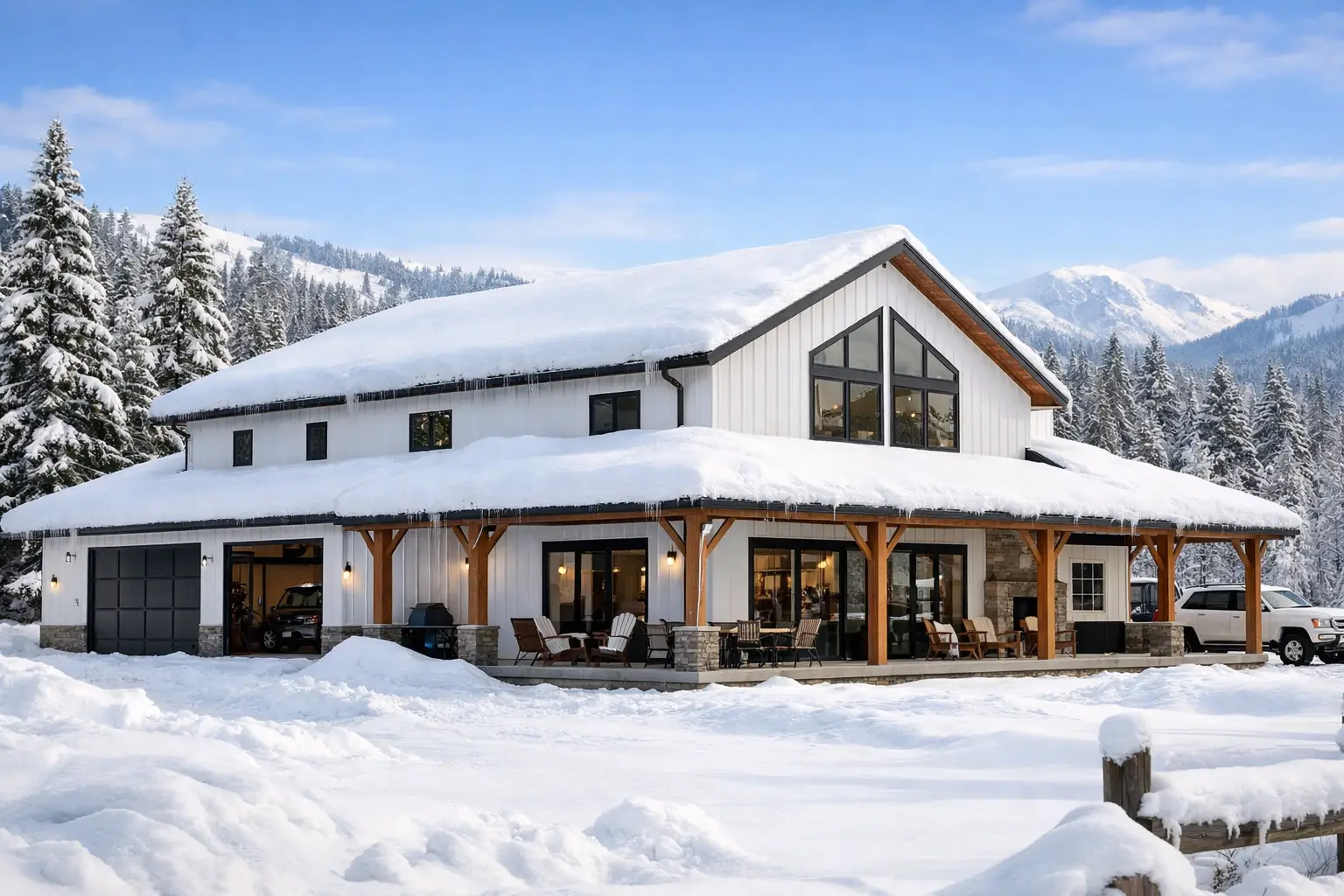
A lower-slope roof can still be a good fit in many projects, especially where the building use or desired look calls for it. But lower slopes may hold snow differently, and that can influence the required framing. Gable designs, single-slope sections, and porch tie-ins each have their own structural considerations. A barndominium with a clean modern farmhouse look may be completely achievable, but the building system has to support that style in the actual climate where it will be built.
This is where buyers benefit from comparing floor plans and exterior concepts alongside the steel package, not separately. The best-looking layout on paper is not always the most efficient one to build once snow load, porch lines, and span requirements are factored in.
Barndominium layouts and snow load need to work together
For a barndominium, the structural conversation gets more layered because the building is serving as a home, not just a shell. Ceiling heights, open great rooms, attached shops, covered patios, and garage bays all change the framing strategy.
For example, a barndominium plan with shop can be a strong fit for rural landowners who want equipment storage and living space under one roof. But if the shop side calls for a wider clear span and the residential side includes deep covered porches, the engineered package has to account for those transitions carefully. Snow can drift around elevation changes, overhangs, and adjacent roof sections.
The same goes for affordable barndominium plans. Affordable does not mean underbuilt. It usually means choosing a layout that gives you the function you need without unnecessary complexity. In snow-prone areas, simpler roof lines and cleaner spans can sometimes reduce structural complications, though that is not a rule in every case. It depends on the site, the building width, the use, and the local code requirements.
What to ask when comparing quotes
If you are shopping metal building packages, the right question is not just, What is the price? The better question is, What exactly is this building engineered for?
Ask what design snow load the building is based on and whether the quote is tied to your project location. Ask whether the supplier reviewed your floor plan, roof style, and attached features like porches or lean-tos. Ask if the quote reflects a real engineered package or just a preliminary budget based on generic assumptions.
This is especially important when buyers are comparing suppliers online. One quote may look cheaper because it assumes lighter loading, simpler geometry, or fewer structural demands than your actual project requires. That can create a false sense of savings until revisions show up later.
A good quoting process should narrow the gap between concept and real build cost. No guesswork. No wasted time. Just a building package that fits the project you are actually trying to build.
Cost trade-offs buyers should expect
An engineered metal building for snow load will often cost more than the same footprint engineered for milder conditions. There is no way around that. More steel, different member sizes, and upgraded structural components all affect price.
But the cost conversation should stay grounded. Spending more on the right engineering up front is usually far cheaper than redesigns, delays, or finding out too late that your preferred layout and roof system were priced on the wrong assumptions. In many projects, the smartest savings come from plan efficiency, not from trimming structural requirements.
That is why early planning matters. If you are still comparing barndominium layouts, this is the stage to identify which plans are likely to work best with your site conditions, shop needs, and budget. A layout with fewer structural complications may protect both your pricing and your timeline.
Site conditions can change the equation
Even within the same region, not every site behaves the same way. Exposure, wind patterns, terrain, and roof obstructions can influence how snow accumulates. A property with open exposure may create different design demands than a more sheltered site. An attached porch, lower roof section, or step-down over a garage can also create drifting concerns.
This is why engineered metal building projects should not be treated like off-the-shelf purchases. The building system, floor plan, and jobsite conditions need to be coordinated from the start. For buyers working through multiple decisions at once, from floor plans to pricing to builder selection, having one team help line up those moving parts can prevent a lot of expensive backtracking.
The best path for buyers still in the planning stage
If you are early in the process, do not wait until after you fall in love with a floor plan to talk about structural loads. Start with the use of the building, the site location, the approximate dimensions, and the kind of layout you want. Then compare plan options that make sense for both how you want to live and how the steel system will need to perform.
That approach works especially well for buyers looking at modern barndominiums, open-concept homes, or plans with shops and covered outdoor living. The goal is not to shrink your vision. The goal is to match it with the right engineered package before pricing gets muddy.
Turn Key Building Finder works with buyers who need that full picture, from matching the right floor plan to the right engineered steel package and helping connect the project to qualified builders. That matters when the details are structural, the budget is real, and the wrong assumptions can follow a project for months.
A good building starts with the right numbers, not just the right rendering. When snow load is part of the equation, that is where smart planning pays off.
Leave a Reply